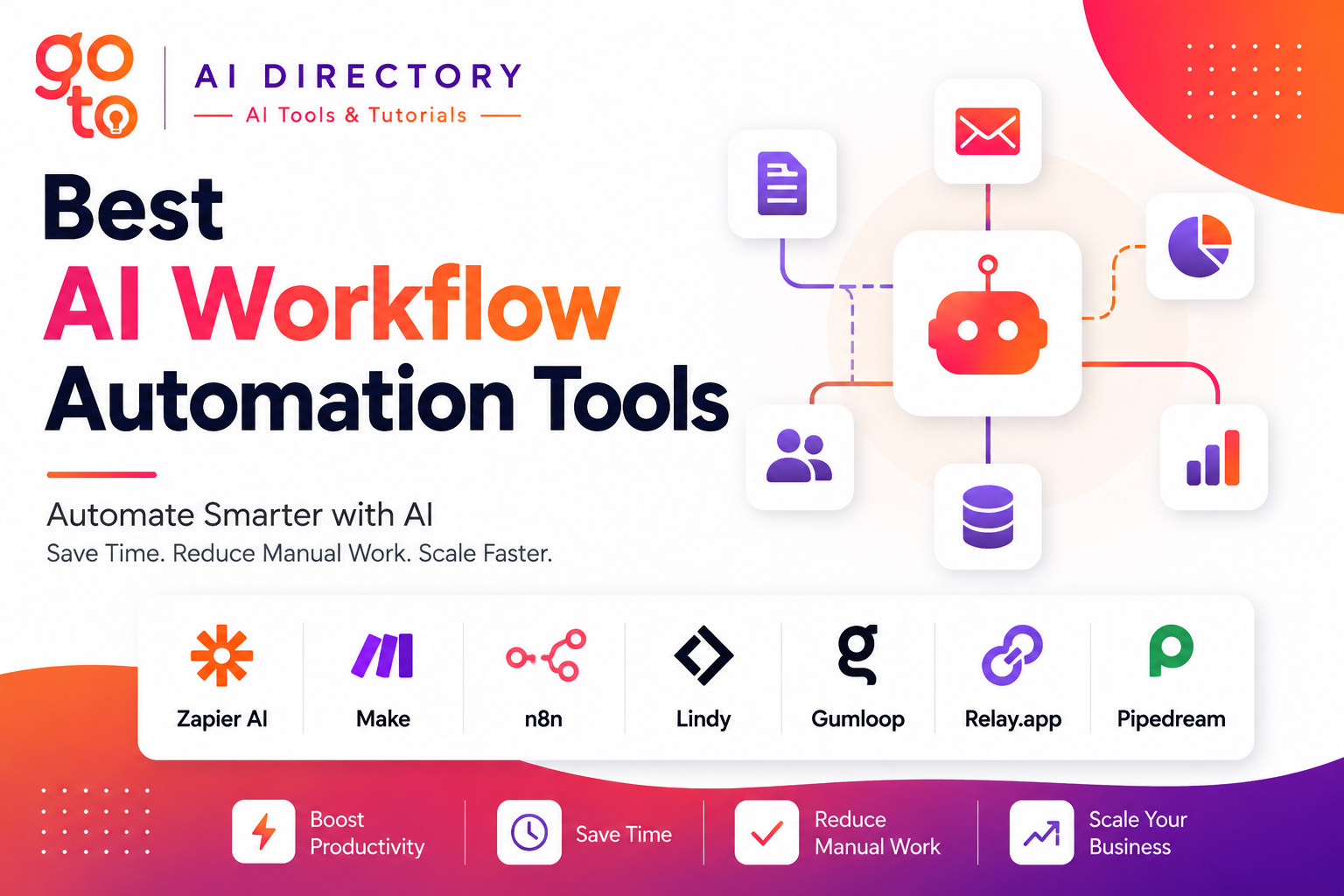
Best AI Workflow Automation Tools in 2026
Businesses no longer use automation simply to move data between apps. Today, artificial intelligence can understand emails, summarize meetings, classify documents, respond to customers, and even make decisions based on business rules.
This shift has given rise to a new generation of AI Workflow Automation platforms that combine traditional automation with AI models, intelligent agents, and natural language workflows.
Whether you’re a marketer automating lead generation, a sales team qualifying prospects, or a developer building AI-powered workflows, choosing the right AI Automation Software can save hours of repetitive work every week.
In this guide, we compare the best AI Workflow Automation tools available today, highlighting their strengths, ideal use cases, and how they differ from traditional automation platforms.
Best AI Workflow Automation Tools at a Glance
| Tool | Best For | No-Code | AI Features | Best Users |
|---|---|---|---|---|
| Zapier AI | Overall automation | ✅ | ⭐⭐⭐⭐⭐ | Businesses |
| Make | Visual workflows | ✅ | ⭐⭐⭐⭐☆ | Teams |
| n8n | Developers | ⚙️ | ⭐⭐⭐⭐☆ | Technical users |
| Lindy | AI agents | ✅ | ⭐⭐⭐⭐⭐ | Business operations |
| Gumloop | AI workflows | ✅ | ⭐⭐⭐⭐⭐ | Marketing & research |
| Relay.app | Human + AI workflows | ✅ | ⭐⭐⭐⭐☆ | Growing teams |
| Pipedream | API automation | ⚙️ | ⭐⭐⭐⭐☆ | Developers |
Why Use AI Workflow Automation?
Traditional automation follows predefined rules.
For example:
If someone submits a form → Send an email.
Modern AI Workflow Automation goes much further.
An AI workflow can:
- Read incoming emails
- Understand customer intent
- Summarize documents
- Classify support tickets
- Extract information from PDFs
- Generate reports
- Write responses
- Route requests automatically
Instead of automating individual tasks, today’s AI Automation Software can automate entire business processes with minimal manual intervention.
How We Chose These Tools
We evaluated each platform using the criteria that matter most to businesses:
- AI capabilities
- Ease of use
- Workflow flexibility
- Number of integrations
- Scalability
- Collaboration features
- Developer options
- Overall value
Each tool excels in different areas, so the best choice depends on your workflow rather than the number of features.
1. Zapier AI
Best Overall AI Workflow Automation Platform
Zapier has evolved beyond simple app integrations into one of the most comprehensive AI Workflow Automation platforms available. In addition to connecting thousands of applications, it now includes AI-powered workflow creation, natural language automation, AI chatbots, and intelligent data processing.
Users can describe workflows in plain English, allowing AI to generate automation sequences without manually building every step. Zapier also supports AI-powered agents that can analyze information, draft content, and complete repetitive business tasks.
Key Features
- AI workflow builder
- AI-powered chatbots
- Natural language automation
- 7,000+ app integrations
- AI data extraction
- Multi-step workflows
Pros
✔ Extremely beginner friendly
✔ Largest integration library
✔ Excellent documentation
✔ Powerful AI features
Cons
- Advanced workflows can become expensive
Best For
- Small businesses
- Marketing teams
- Sales automation
- Customer support
- Operations
Expert Tip: If you’re new to AI Workflow Automation, Zapier offers one of the easiest ways to build intelligent workflows without coding.
2. Make
Best for Visual Workflow Design
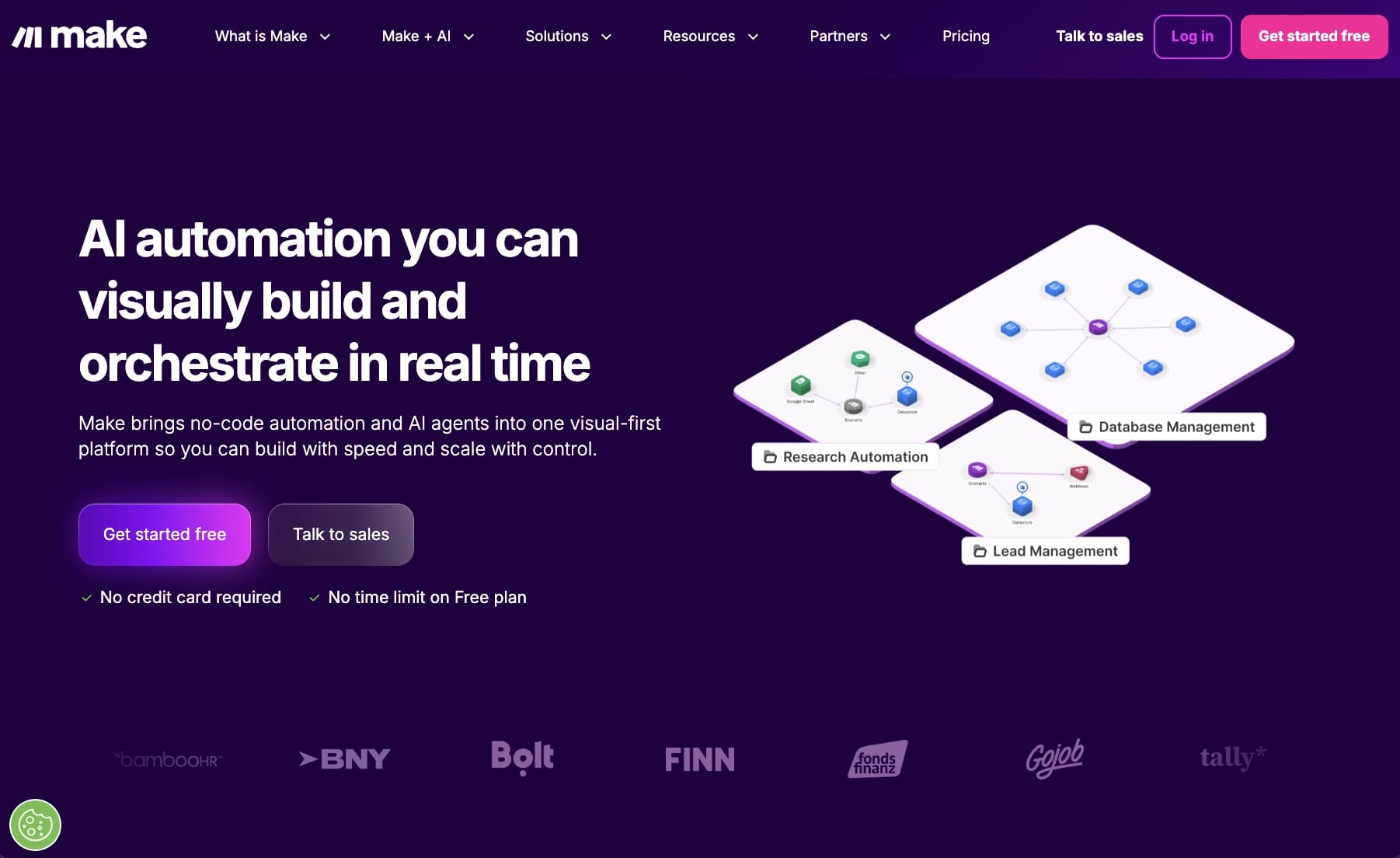
Make is known for its visual automation builder, allowing users to create sophisticated workflows through an intuitive drag-and-drop interface. Its visual approach makes it easier to understand complex automations involving multiple apps, conditional logic, and data transformations.
As AI Automation Software continues to evolve, Make has expanded its support for AI services, enabling users to connect popular language models, automate document processing, and build AI-powered business workflows.
Key Features
- Visual workflow builder
- AI integrations
- Advanced branching logic
- Data transformation
- Hundreds of app integrations
- Scheduling and monitoring
Pros
✔ Excellent visual interface
✔ Powerful workflow customization
✔ Good balance between simplicity and flexibility
✔ Strong AI integrations
Cons
- Slight learning curve for beginners
Best For
- Agencies
- Marketing teams
- Ecommerce
- Business operations
3. n8n
Best AI Workflow Automation Tool for Developers
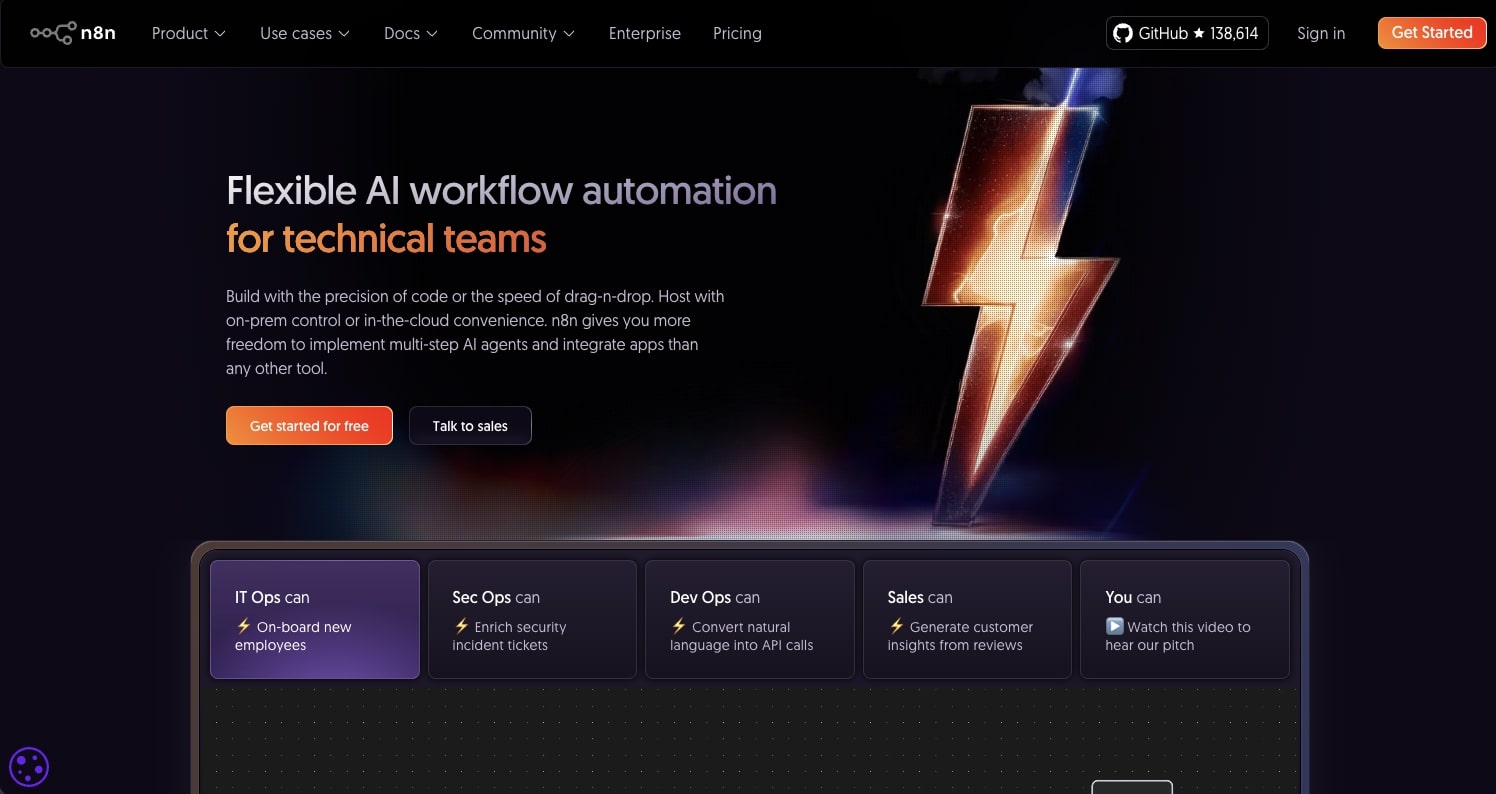
Unlike many no-code platforms, n8n gives developers greater control over automation while still providing a visual workflow builder. It supports self-hosting, custom JavaScript, API integrations, and advanced logic, making it popular among technical teams.
n8n also enables businesses to integrate large language models, vector databases, and AI APIs into custom workflows, making it highly flexible for organizations building internal AI solutions.
Key Features
- Self-hosting
- AI model integrations
- API automation
- Custom code support
- Workflow templates
- Open-source platform
Pros
✔ Highly customizable
✔ Developer friendly
✔ Strong AI flexibility
✔ Self-hosting available
Cons
- Better suited for technical users than complete beginners
Best For
- Developers
- SaaS companies
- Internal automation
- Technical teams